
GREECE TO THE UNITED STATES
History of economic thought and theories
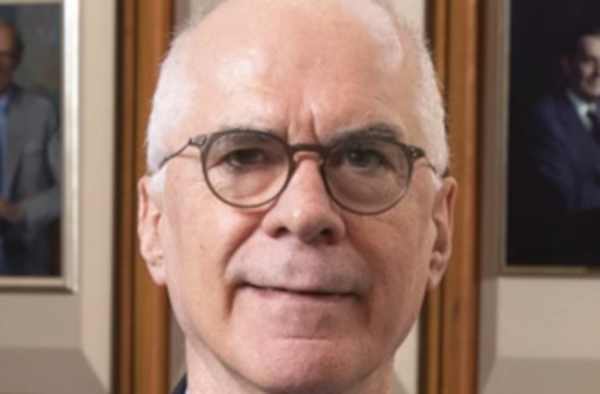
Michalis Psalidopoulos (Fulbright Scholar, 1992-1993) currently serves as Advisor and Chairman of the Institute for Hellenic Growth and Prosperity (IHGP) at the American College of Greece (ACG). He is Professor Emeritus in the Department of Economics at the University of Athens and remains active in teaching and research on the History of Economics and its relationship to economic policy.
Psalidopoulos' academic path was profoundly influenced by his Fulbright experience. After earning his bachelor's degree from the University of Athens and pursuing graduate studies at the Free University of Berlin, he began his academic career at Panteion University in Athens. His early research in the History of Economic Thought led him to seek academic environments where his field was more actively developed and supported. His participation in conferences in England and, later, the United States introduced him to a wider international community of scholars and to new possibilities for collaboration.
His first visit to the United States came in 1990, when he attended a conference of the U.S. History of Economics Society at the University of Maryland. During that trip, he visited Duke University's Department of Economics, home to an influential group of historians of economic thought and the journal History of Political Economy (HOPE). The experience convinced him that he wanted to return to the United States for a longer period of research.
Psalidopoulos had been familiar with Senator J. William Fulbright since his undergraduate years and was inspired by his ideas about international educational exchange. When he began looking for financial support for a research stay in the United States, he learned about the Fulbright Foundation's work in Greece and the opportunities it offered academics as well as students. He subsequently applied for and received a Fulbright grant for a three-month research stay at Duke University in 1993.
The experience proved to be a major turning point in his academic career. At Duke, he was struck by the openness of his colleagues and their willingness to engage in dialogue and scientific debate. At a time when the History of Economic Thought was being marginalized in postgraduate education and increasingly challenged as an academic field, the Fulbright experience helped him develop an international network of scholars committed to its continued advancement.
Working with American and European colleagues, Psalidopoulos helped develop plans for international conferences and new academic collaborations. He organized an American-European conference in Athens in 1997 and contributed to the development of contacts with the Japanese Society for the History of Economic Thought. These efforts formed part of the broader processes that led to the establishment of the European Society for the History of Economic Thought. The resulting network extended beyond economists to include methodologists, philosophers of science, political scientists, and historians, fostering wider interdisciplinary dialogue.
Psalidopoulos considers this one of the most important legacies of his Fulbright experience: the opportunity to contribute, in his own field, to a broader international effort to sustain and advance scientific knowledge through cooperation. He subsequently returned to the United States to teach for four years at the Fletcher School of Law and Diplomacy at Tufts University and served for another five years as an Alternate Executive Director at the International Monetary Fund before returning to Greece.
For Psalidopoulos, the Fulbright Program's greatest contribution lies in the scientific and human connections it creates across borders. He believes that hard work and scholarly cooperation are essential vehicles for human progress, and that Fulbright alumni have a shared responsibility to build on the international bonds established through the program and contribute, through their respective fields, to a better future.